Scheduling is one of the most operationally critical functions in home-based care, yet it is also one of the most fragile. Scheduling operations leaders sit at the center of competing priorities: patient needs, clinician availability, geography, regulatory requirements, productivity expectations, and constant change.
As demand for home-based care continues to rise and clinician shortages persist, scheduling workflow complexity has intensified. For many agencies, the result is scheduler burnout, turnover, and operational instability that ripples across intake, care delivery, and patient experience.
Understanding why schedulers burn out, and how technology combined with leadership and process discipline can improve scheduler experience and retention, is a necessary step toward sustainable operations.
Why schedulers burn out
Schedulers are often measured by outcomes they cannot fully control. Missed visits, delayed starts of care, clinician dissatisfaction, and patient complaints frequently surface at the scheduling desk, even when the root cause lives elsewhere in the organization.
Amy Jo, PT, PCC, Chief Clinical and Strategy Officer at Care Central VNA & Hospice Inc., describes the role this way:
“A scheduler’s job is difficult because they are essentially master sandcastle builders, constructing a carefully balanced plan out of constantly shifting pieces. One call-out, one hospitalization, one weather event, or one urgent referral can send a wave through the entire day. Schedulers must juggle clinician availability, patient needs, geography, productivity expectations, regulatory requirements, and last-minute changes, all while keeping both staff and patients supported.”
Several core challenges consistently contribute to burnout.
Juggling equally important priorities
Schedulers are asked to optimize for speed, continuity, productivity, compliance, and satisfaction simultaneously. Without a clear scheduling workflow and system support, tradeoffs become manual, reactive decisions that accumulate stress throughout the day.
Clinician shortages increase complexity
According to federal labor data, home health, hospice and personal care services continue to face workforce shortages that outpace demand growth. Fewer clinicians mean tighter schedules, less flexibility, and more downstream rework when changes occur.
Constant interruptions
Phone calls, texts, same-day changes, missed visits, and urgent referrals interrupt focus continuously. Without automation to absorb routine tasks, schedulers spend their day reacting instead of planning.
Lack of control and limited support
When schedulers lack visibility into clinician availability, geography, and visit rules, they are left managing outcomes without the authority or tools to influence them. As Amy Jo explains:
“Burnout most often comes from relentless interruptions, pressure from multiple directions, lack of control over outcomes, and the emotional toll of feeling responsible when things don’t go perfectly. When schedulers are poorly supported, don’t have the tools or resources to do their job effectively, or are blamed for systemic issues, the role can quickly become overwhelming.”
Why scheduling workflow matters more than ever
Scheduling is not an isolated function. It sits at the intersection of intake, clinical leadership, compliance, and revenue cycle performance. Breakdowns in scheduling workflow often surface as:
- Delayed starts of care
- Missed or rescheduled visits
- Clinician dissatisfaction and turnover
- Patient frustration
- Administrative rework across teams
As agencies face reimbursement pressure and tighter margins, these inefficiencies are no longer tolerable. Improving scheduler experience is not just a workforce issue; it is an operational imperative.
Technology alone is not the answer, but it is essential
Modern scheduling software for home health care can dramatically reduce manual effort, but technology must be paired with strong leadership and clear processes to deliver meaningful relief.
Amy Jo emphasizes the human side of retention:
“The most effective ways to avoid scheduler turnover are strong leadership support, clear processes, and visible appreciation for the complexity of the role. Cross-training, backup coverage, and including schedulers in operational decisions go a long way toward building engagement and trust.”
At the same time, technology plays a critical role in reducing cognitive load.
“Automating routine tasks, improving visibility into clinician availability and geography, supporting real-time updates, and reducing manual rework. When systems are well-designed, they free schedulers to focus on problem-solving instead of data entry.”
This is where a modern patient scheduling system must do more than digitize calendars. It must actively support decision-making.
How Smart Scheduling supports scheduler experience
Smart Scheduling is designed to reduce the most common sources of scheduler burnout by embedding automation directly into daily workflows, while keeping human control where it matters. Key capabilities include:
Automation that works ahead, not just in real time
Smart Scheduling can automatically schedule visits seven to 22 days in advance based on visit type, discipline, availability, and agency-defined rules. This shifts schedulers from constant manual placement to proactive oversight.
Real-time visit dispatching
Same-day automation supports missed visits, urgent clinical changes, or last-minute requests without rebuilding schedules from scratch.
Semi-automated workflows with human control
Some workflows intentionally require a human click to move forward, allowing agencies to balance automation with clinical judgment and operational preferences.
Clinician notifications
When schedules change, clinicians can receive push notifications, reducing inbound calls and follow-up work for schedulers.
Proper scheduling practices are highly customized by visit type, discipline, diagnosis, and patient functionality. Smart Scheduling uses visit types and configurable guardrails to reflect how agencies actually operate, rather than forcing one-size-fits-all logic.
Measuring Scheduling ROI
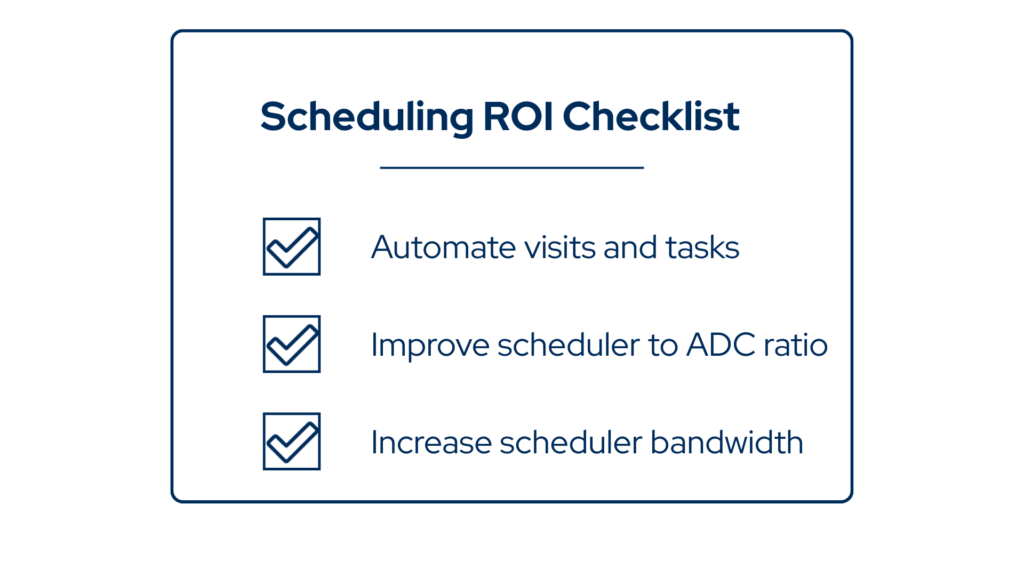
When agencies evaluate medical scheduling software, HCHB focuses closely the areas schedulers directly experience.
With Smart Scheduling, agencies have the potential to:
- Automate a significant portion of visit scheduling, depending on configuration and operational discipline
- Complete certain workflow tasks with zero manual touches
- Increase average daily census coverage per scheduler
- Increase scheduler bandwidth to allow for cross-training and career advancement
When evaluating scheduling ROI, agencies consider organizational preferences and expectations, system setup, visit mix, clinician availability, and adoption of technology best practices.
Where people and process still matter most
Technology reduces friction, but it does not replace leadership alignment. Amy Jo highlights the importance of cross-functional clarity:
“Clear referral workflows, consistent admission practices, timely communication from clinical leaders, and shared accountability across departments are just as important as providing schedulers with the technology they need to be effective. Schedulers thrive when expectations are aligned and collaboration is the norm.”
Standardization does not mean rigidity. The most resilient scheduling teams balance consistency with autonomy.
“It is the best of both worlds when schedulers have standardization for their core processes and escalation pathways for any issues, but also autonomy in how they problem-solve and respond to the multitude of variables impacting scheduling at any given time. Essentially, they have clear directions on what needs to be done, but flexibility in how they get there.”
Scheduling as a pathway to leadership
Retention improves when schedulers see a path to advance their careers.
“Career advancement is absolutely important. Providing pathways into lead scheduler roles, operations, or performance improvement; along with training and mentorship, signals that scheduling is not a dead end, but rather a respected and valued entry point into healthcare operations.”
Technology that reduces burnout creates space for learning, leadership development, and strategic contribution.
Building a sustainable scheduling system
For Directors of Scheduling and Operations, improving scheduler experience starts with three commitments:
- A clear, shared scheduling workflow that aligns intake, clinical leadership, and operations
- Technology that automates routine work while preserving control
- Leadership support that recognizes scheduling as a strategic function, not just an administrative one
When these elements work together, schedulers are no longer forced to hold the system together manually. They become empowered operators within a supportive, resilient model.
Talk with an HCHB Smart Scheduling expert
Learn how agencies are modernizing scheduling workflows to reduce burnout, improve efficiency, and support sustainable growth or contact us to start a conversation.