For Chief Clinical Officers, Directors of Nursing, and clinician advocates, scheduling is not an abstract operational problem. It shows up every day in clinician fatigue, missed expectations, uneven workloads, and the growing difficulty of retaining experienced staff.
When clinicians do not know what their week will look like, when drive time stretches the workday, or when schedules change late in the evening, the impact is personal. Over time, that instability contributes to burnout, disengagement, and turnover.
This is where scheduling software for home care plays a critical clinical leadership role. When designed and implemented well, advanced scheduling software can support clinician work-life balance, protect care quality, and create the predictability clinicians need to stay in the field.
Why scheduling belongs on the clinical leadership agenda
Clinical leaders are accountable for outcomes, quality, and staff sustainability. Scheduling sits at the intersection of all three.
From a clinical perspective, poor scheduling leads to:
- Longer and less predictable workdays
- Excessive drive time that adds stress without adding clinical value
- Inconsistent caregiver–patient relationships
- Clinicians working outside their preferred availability
- Highly licensed staff being assigned to visits that do not require their level of skill
Over time, these patterns erode trust. Clinicians feel they have less control over their work, even when they are deeply committed to patient care.
Advanced caregiver scheduling software and healthcare staff scheduling software help address these issues by shifting scheduling from reactive firefighting to proactive planning.
Scheduling factors that directly affect clinician satisfaction
Clinical leaders often hear broad concerns like “the schedule keeps changing” or “my days are too long.” Scheduling software allows those concerns to be addressed through specific, measurable factors.
Capacity planning that protects clinicians from burnout
Capacity planning is not just about growth. It is about knowing how much work your clinicians can realistically carry without compromising care or well-being.
Effective patient scheduling software supports capacity planning by helping agencies:
- Identify available clinician capacity by discipline and territory
- Avoid over-booking that leads to extended workdays
- Avoid underutilization that leaves clinicians short on hours
Many agencies aim to build schedules multiple weeks in advance. Scheduling further out, often around three weeks, helps create a more stable baseline schedule that clinicians can see and plan around. Even when changes occur, the overall structure feels more predictable.
For clinicians, that predictability matters. It allows them to plan personal responsibilities and approach their work with less anxiety about last-minute disruptions.
Schedule balance and predictability
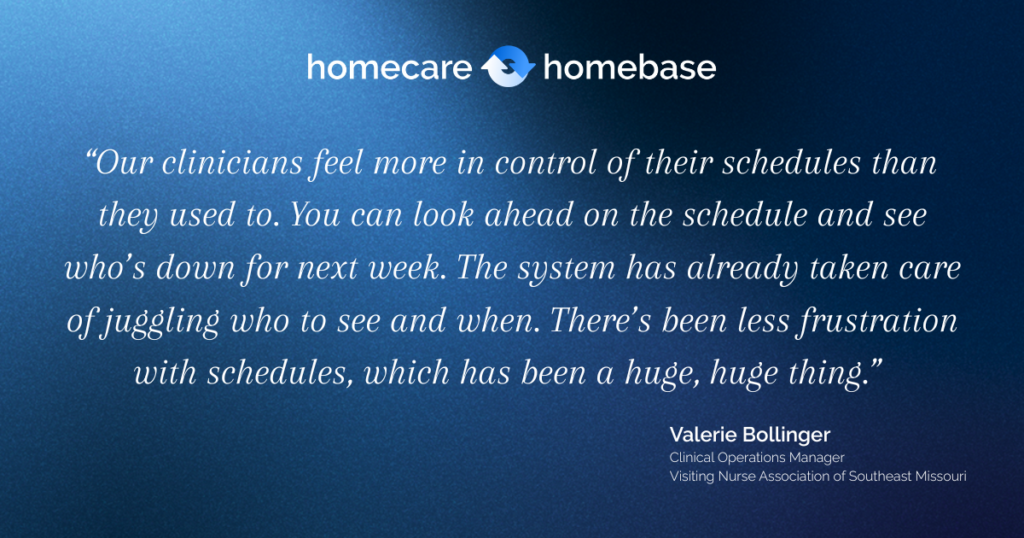
Schedule balance refers to how visits are distributed across the workweek, not just how many visits a clinician has. A week that is light at the beginning and overloaded at the end feels very different from one that is evenly paced.
Scheduling predictability reflects how consistently clinicians can expect:
- Reasonable notice of upcoming visits
- Stable start and end times
- Fewer late-day schedule changes
Advanced scheduling software supports both balance and predictability by applying consistent rules through scheduling algorithms rather than relying on manual judgment alone. This reduces unintended clustering of visits and helps finalize schedules earlier.
Clinical utilization: using clinician time and skills wisely
From a clinical leadership perspective, utilization is about more than productivity. It is about ensuring clinicians spend their time delivering appropriate care, not absorbing avoidable inefficiencies.
Route optimization that respects clinician time
Drive time is one of the most common sources of dissatisfaction in home-based care. Excessive travel lengthens the workday and reduces energy for patient care.
Modern scheduling software features can prioritize localization, grouping visits geographically and optimizing routes so clinicians are not zigzagging across a territory. While some travel is unavoidable, unnecessary mileage does not have to be.
Continuity and license matching
Clinicians consistently report greater satisfaction when they see the same patients over time. Continuity supports stronger relationships, better clinical insight, and less cognitive load at each visit.
Scheduling automation software can be configured to prioritize continuity while still respecting availability, skills, and compliance requirements.
At the same time, license matching ensures clinicians are practicing at the top of their license. When RNs or PTs are repeatedly assigned to visits that could be handled by LPNs/LVNs or PTAs, frustration builds and costs rise. Strong scheduling software helps align visit requirements with clinician credentials, so work is distributed appropriately.
Workday length and sharing the load
In many agencies, the same dependable clinicians end up absorbing extra visits because they are willing to help. Over time, this creates burnout and resentment.
Advanced healthcare staff scheduling software helps distribute work more evenly across the workforce. By using rules-based scheduling, the system can prevent overloading a small subset of clinicians and instead share assignments across the team.
Accounting for real-world availability
Clinicians are professionals, but they are also people. Availability constraints, such as school pickup times or recurring commitments, are often difficult for schedulers to track manually.
Modern scheduling software can incorporate these details into scheduling logic so clinicians are not repeatedly placed in situations they must push back on. This small change can significantly improve trust and satisfaction.
How automation supports clinical leaders without removing control
For clinician advocates, automation can raise understandable concerns about losing clinical judgment. The most effective scheduling solutions are designed to support, not replace, human oversight.
Scheduling automation software should include:
- Nightly automation that builds schedules days in advance
- Real-time visit dispatching for same-day changes, such as missed visits or urgent requests
- Partial or semi-automated workflows where a scheduler reviews and confirms before finalizing
These approaches allow clinical leaders to maintain oversight while reducing the manual burden on schedulers and clinicians. Push notifications and real-time updates keep clinicians informed when changes occur.
Evaluating scheduling software through a clinical lens
When CCOs, Directors of Nursing, and clinician advocates evaluate scheduling software for home care, the most important question is not just efficiency. It is whether the technology supports sustainable clinical practices.
Key questions to ask include:
- Does the system improve schedule balance and predictability for clinicians?
- Can it support capacity planning without pushing clinicians into burnout?
- Does it optimize routing and reduce unnecessary drive time?
- Does it prioritize continuity and skill-based matching?
- Does it help clinicians practice at the top of their license?
ROI discussions are increasingly grounded in how many visits and scheduling tasks can be automated or semi-automated. These are tangible indicators of reduced administrative burden, but outcomes will always depend on configuration, clinical policies, and change management.
Scheduling is part of clinician advocacy
Advocating for clinicians means addressing the systems that shape their daily experience. Scheduling is one of the most powerful of those systems.
When caregiver scheduling software and patient scheduling software are aligned with clinical realities, clinicians experience more predictable days, more reasonable workloads, and stronger relationships with patients.
For clinical leaders, investing in smarter scheduling is not about control. It is about creating an environment where clinicians can focus on care, trust the system supporting them, and envision a long-term future in home-based care.
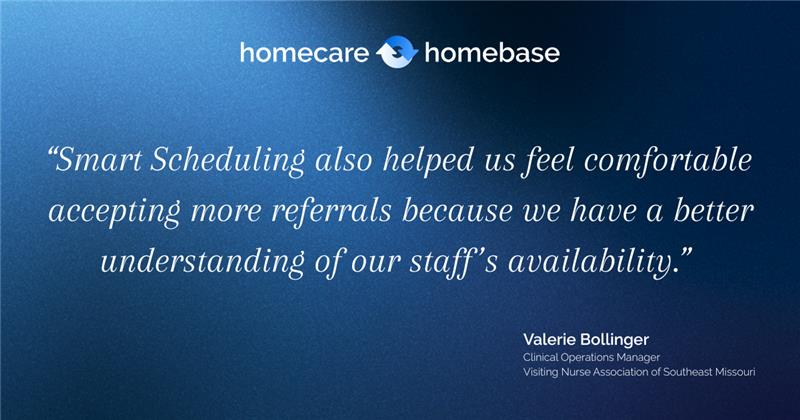
Suggested next step: Review your current scheduling processes through the lens of balance, predictability, capacity planning, and clinical utilization. Identify where smarter scheduling software could reduce friction for your clinicians and strengthen care delivery.